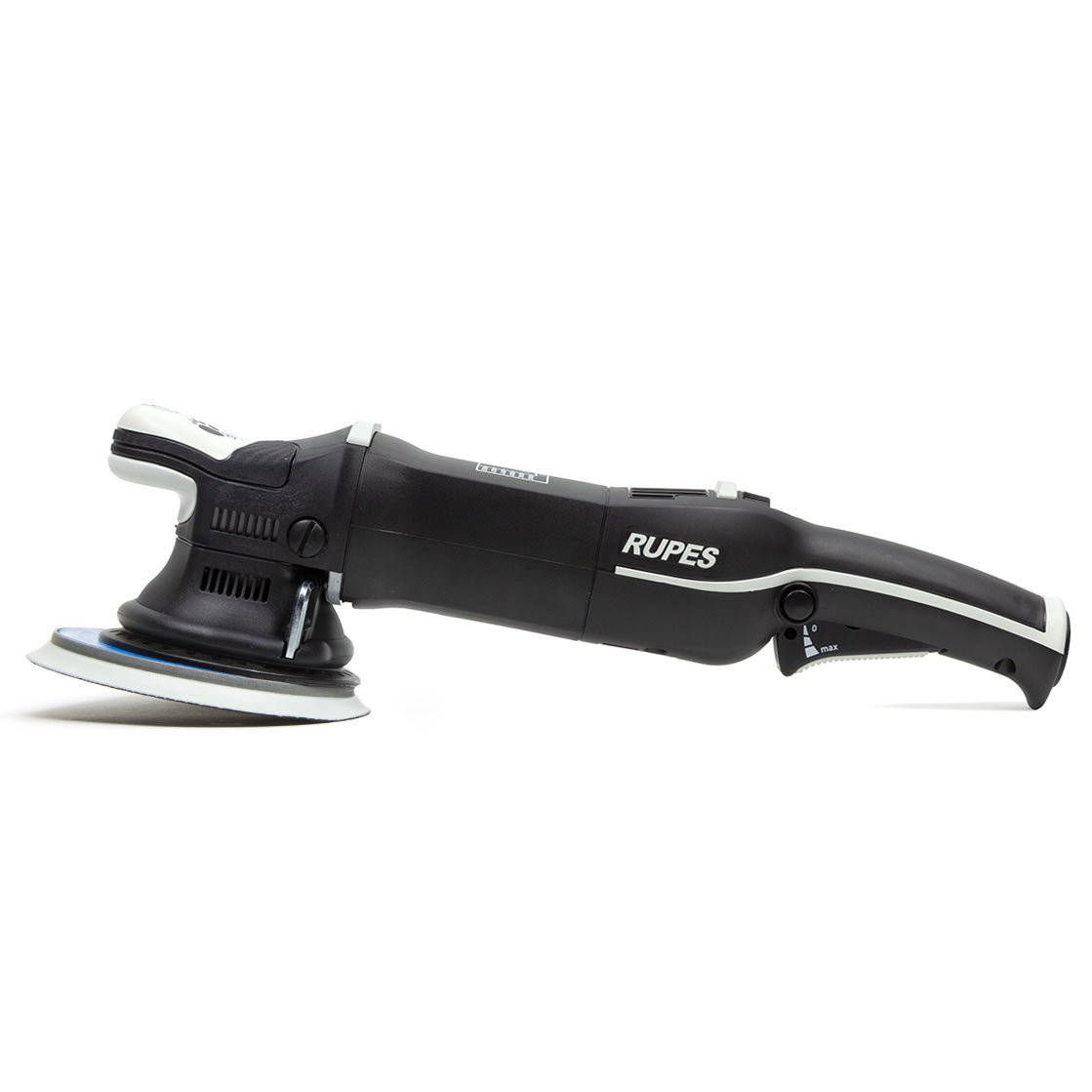
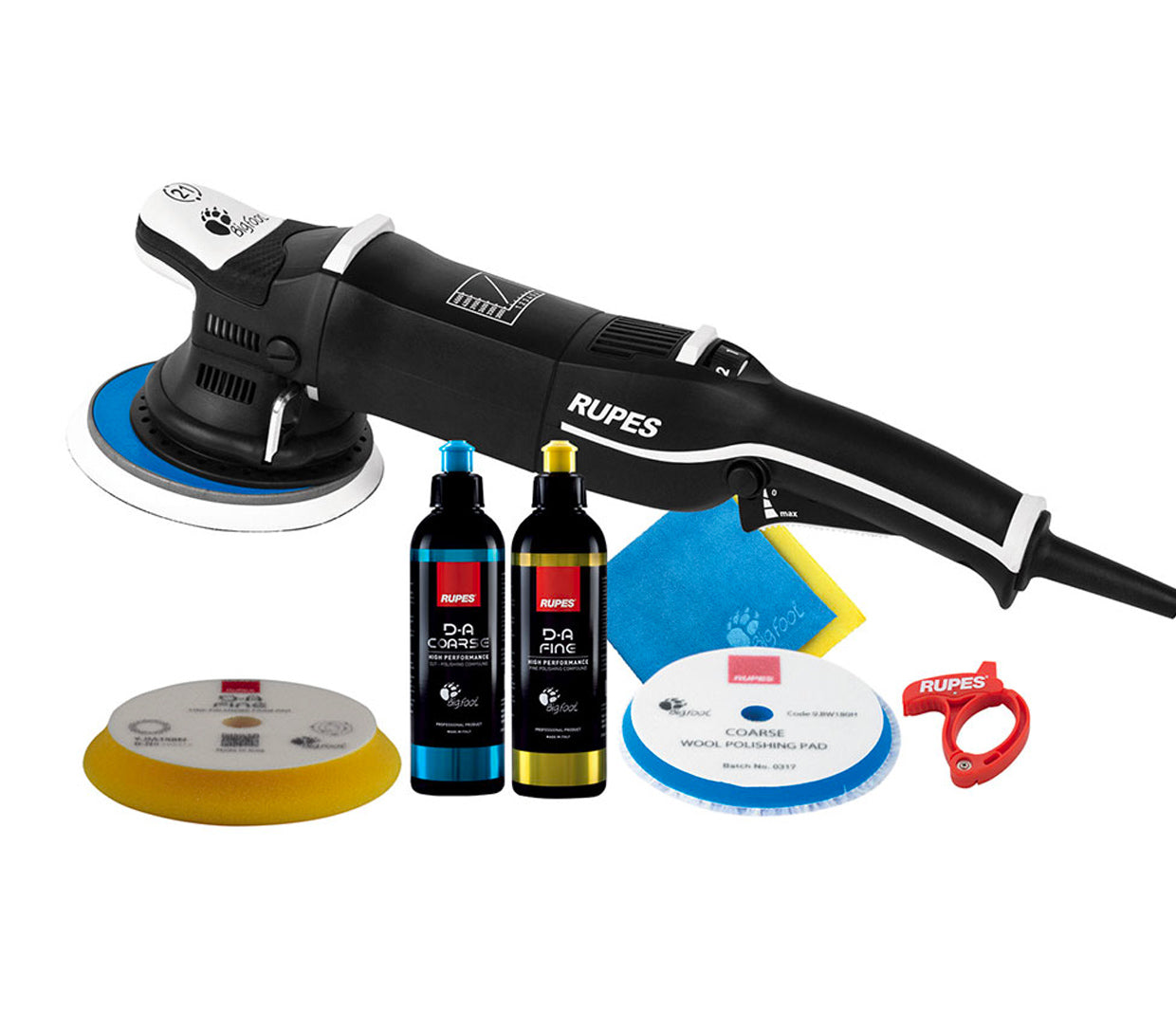
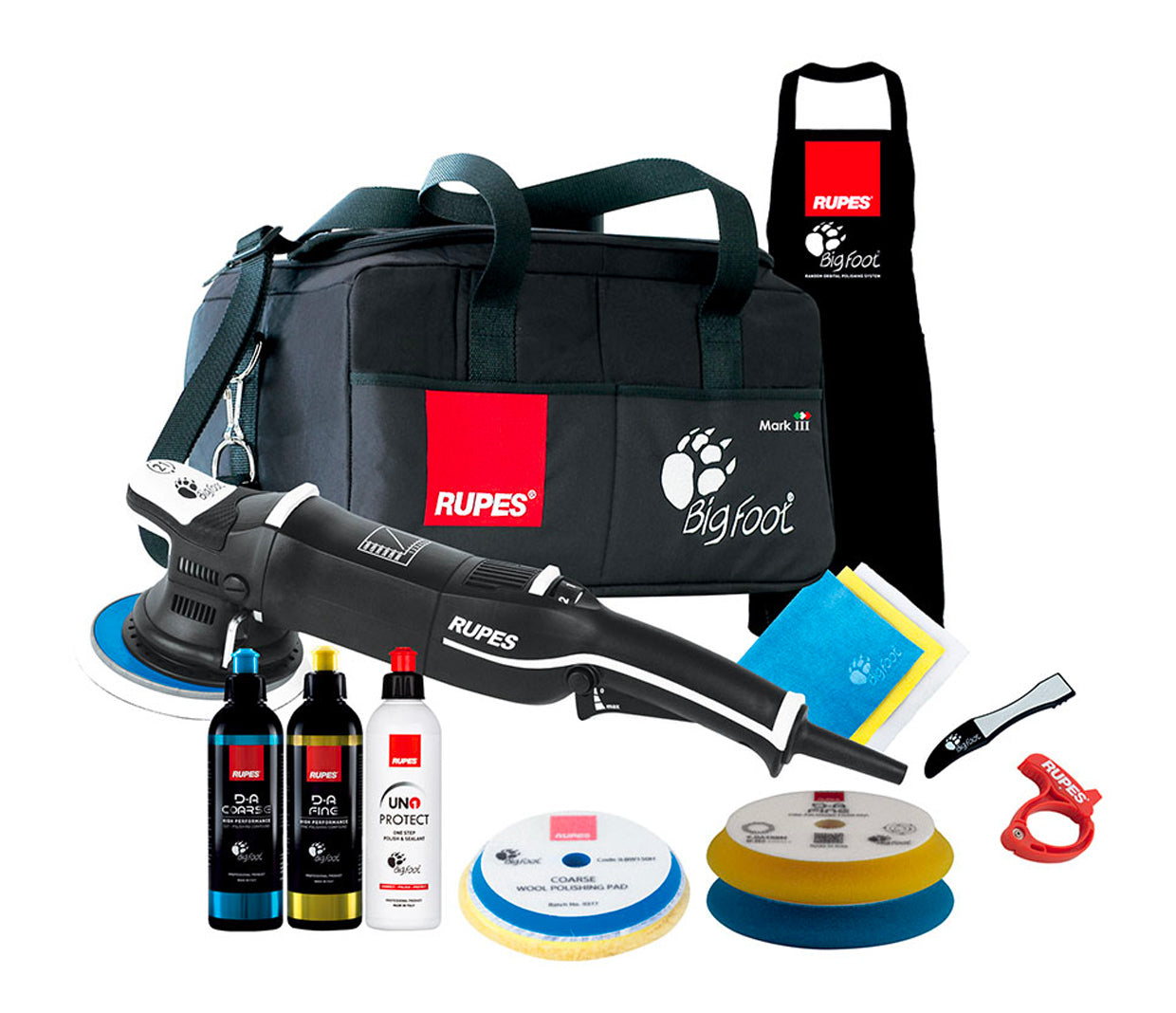
The RUPES LHR 21III BigFoot Polisher is a power tool and thus subject to a number of health and safety risks that should be fully understood from the outset; please read the supplied instructions carefully. Please also visit the links to the backing plate, polishing pad and polishing compound pages provided in the Description section above, and read their How To Use sections carefully. Doing so will help to ensure you obtain the best results from your new machine.
Recommended method for correcting soft paint using the BigFoot system:
To correct obvious swirl marks and other common paint defects, start out with Rupes D-A FINE polishing compound on a RUPES D-A FINE foam polishing pad. Working at a low to moderate machine speed, with moderate arm speed and light pressure, should enable you to correct a large proportion of the defects in just 1-2 attempts. If your paint is in bad condition and you subsequently find that more correction is needed, switch to Rupes D-A FINE polishing compound on a RUPES Wool polishing pad FINE - this combination offers more cutting power, but should be used sparingly, as the rate of paint removal increases significantly. When you are happy with the level of correction, follow up again with Rupes D-A FINE polishing compound on a RUPES D-A FINE foam polishing pad, in order to maximise surface gloss.
Recommended method for correcting intermediate paint using the BigFoot system:
To correct obvious swirl marks and other common paint defects, start out with Rupes D-A FINE polishing compound on a RUPES D-A Coarse foam polishing pad. Working at a moderate machine speed, with moderate arm speed and light pressure, should enable you to correct a large proportion of the defects in just 1-2 attempts. If your paint is in bad condition and you subsequently find that more correction is needed, switch to Rupes D-A FINE polishing compound on a Rupes Wool polishing pad COARSE - this combination offers more cutting power, but should be used sparingly, as the rate of paint removal increases significantly. When you are happy with the level of correction, follow up with Rupes D-A FINE polishing compound on a RUPES D-A FINE foam polishing pad, in order to maximise surface gloss.
Recommended method for correcting hard paint using the BigFoot system:
To correct obvious swirl marks and other common paint defects, start out with Rupes D-A COARSE polishing compound on a RUPES D-A Coarse foam polishing pad. Working at a moderate to high machine speed, with low arm speed and light to moderate pressure, should enable you to correct a large proportion of the defects in just 1-2 attempts. If your paint is in bad condition and you subsequently find that more correction is needed, switch to Rupes D-A COARSE polishing compound on a Rupes Wool polishing pad COARSE - this combination offers much more cutting power, but should be used sparingly, as the rate of paint removal increases significantly. When you are happy with the level of correction, follow up with Rupes D-A FINE polishing compound on a RUPES D-A FINE foam polishing pad, in order to maximise surface gloss.
General usage notes:
(i) always wear earplugs and safety spectacles when using a machine polisher; (ii) always tie back long hair and tuck away anything else that could accidentally get caught up (e.g. necklaces or headphone cables); (iii) always switch off your machine at the mains before fitting or swapping the backing plate; (iv) always route the cable up and over your opposite shoulder so as to avoid it coming into contact with the car; (v) always ensure that the pad is in contact with the bodywork when you switch the machine on and off - if you don't do this it's likely to fly off at high speed; (vi) always familiarise yourself fully with the instructions provided for the pads and polishes you are using, and adjust your technique accordingly (e.g. tool speed, arm speed and pressure); (vii) always let the machine do the bulk of the work - there is rarely any need to exert heavy pressure when machine polishing (if the current pad and polish you are using aren't delivering sufficient cut, step up to a more aggressive combination rather than trying to force the issue); (viii) always take a break if you notice that the machine is becoming hot during use - hot machines tend to transmit heat down into the backing plate and pad, which can result in the pad failing prematurely; (ix) always lay the machine on its back when it's not in use, to prevent the pad coming into contact with the ground, and; (x) avoid stepping on the power cable at all times.